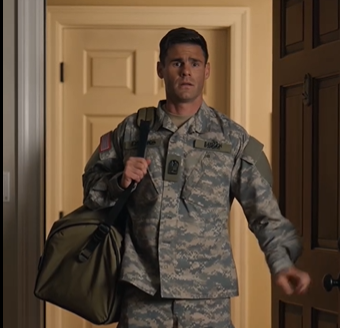
“…My what?”
The woman covered her mouth and sobbed harder.
The man in the blue shirt lowered his eyes and pushed the folder toward him.
Inside were hospital papers. Birth records. Therapy notes. Emergency contact forms.
At the top of the first page was the name of a little girl.
And next to “father,” there was only one word:
Deployed.
The soldier’s legs nearly gave out.
“She was born seven months after they told me you were missing,” his wife said through tears. “Then they told me you were dead. They made me sign papers. They made me believe there was nothing left to hope for.”
His hands shook as he turned the pages.
A photo slipped out.
A little girl sleeping with one hand wrapped around a frayed military patch.
His patch.
He stared at it, broken open by the sight of a child he had never held, never seen, never even known existed.
Then he looked up at the man in blue with raw fury and confusion.
“Who are you?”
The man swallowed hard.
“A trauma counselor,” he said. “For her. And for your daughter.”
The soldier went still.
Everything he had seen from the doorway — the closeness, the late-night presence, the quiet tension — had looked like betrayal because pain had reached the answer first.
But the woman shook her head and stepped closer.
“I never replaced you,” she whispered. “I was trying to keep her alive… and trying to survive the lie they told us both.”
The soldier’s eyes fell back to the unopened letters on the table.
Years of them.
Years stolen.
Then, from the hallway, a tiny sleepy voice drifted into the room:
“Mom?”
All three of them turned.
A little girl stood there clutching a stuffed bear, hair messy from sleep, eyes heavy and confused.
The soldier froze.
Because she had his eyes.
Not almost.
His.
The room went silent as she looked at the patch in his trembling hand… then at his face.
And in a soft, uncertain voice, she asked:
“Are you the hero from Mommy’s letters?”