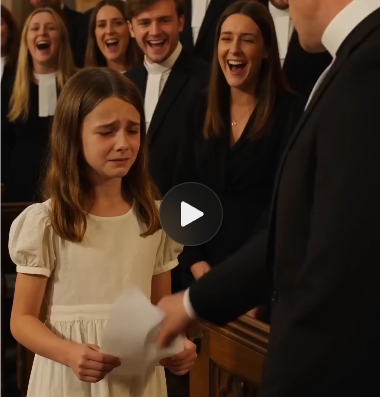
The girl stopped singing, frightened by the old man crying on the church floor.
The organist reached for the crumpled sheet in the director’s hand, but his fingers shook too badly to take it.
“Give it to me,” he whispered.
The director slowly opened his fist.
The paper was torn, but the first line was still visible.
The organist covered his mouth.
“I wrote this with Rose.”
The girl’s breath caught.
“My grandma said nobody believed it was hers.”
The organist looked at her through tears.
“They didn’t. And I was too afraid to tell the truth.”
The whole choir went silent.
The director stepped back, shame finally touching his face.
The girl looked down at her bare feet.
“She sang it to me when we had nowhere to sleep,” she whispered. “She said one day someone in this church would remember.”
The organist broke completely.
He sat at the organ and played the opening chord with shaking hands.
“Then sing it,” he said. “For her.”
The girl’s voice rose softly through the church, broken at first, then clear.
No one laughed now.
Because the street child they tried to silence was singing the song her grandmother had been erased from.