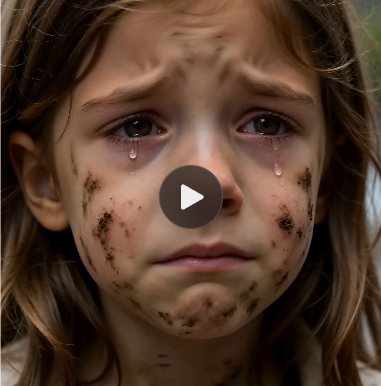
For a second, neither of them moved.
The city blurred around them in noise and motion, but between the hot dog cart and the curb, time seemed to stop. The elderly vendor stared at the two coins like they were made of gold. Not because of what they were worth—but because of what they had survived.
The young woman closed her fingers gently around the old woman’s weathered hands.
“You were the first person who fed me without asking what was wrong with me,” she said softly. “The first person who didn’t look at me like I was a problem.”
The old vendor’s lips trembled.
“Oh, sweetheart…”
The young woman laughed once, but it broke in the middle.
“I used to repeat your words to myself every time I thought I wouldn’t make it.”
The old woman’s eyes filled.
“Just survive?” she whispered.
The young woman nodded.
“I did.”
Her voice shook now, but she did not look away.
“I survived shelters. I survived nights in train stations. I survived jobs where people talked to me like I was nothing. I studied when I was tired. I worked when I was sick. I kept those two coins because I didn’t want to forget the day somebody gave me food and made me feel human at the same time.”
The old woman was openly crying now.
“I only gave you a hot dog.”
The young woman shook her head immediately.
“No. You gave me a reason not to disappear.”
That sentence landed like a blow.
The vendor looked down, unable to hold the young woman’s gaze for a second because the weight of being remembered so deeply was almost too much. Her hands trembled inside the younger woman’s grip.
The young woman took a slow breath and glanced at the cart.
“It’s the same cart,” she said with a tearful smile. “Same corner. Same smell. I walked this block three times before I got out of the car because I was afraid it wasn’t really you.”
The elderly vendor let out a broken laugh through tears.
“I thought I imagined you all these years.”
“No,” the young woman whispered. “You changed my life.”
Then she lifted the black envelope.
The vendor looked at it, confused again.
“What is that?”
The young woman placed the two old silver coins into the old woman’s palm first, curling her fingers over them with care. Then she set the black envelope beside them.
“It started with a meal,” she said. “So I wanted to come back with more than thank you.”
The old woman looked at the envelope but did not open it yet.
The young woman continued, her voice low and unsteady.
“I found out the city planned to remove this cart next year. I found out your rent went up. I found out you’ve been working even when your hands hurt.”
The old woman blinked in surprise.
“How do you know all that?”
“Because I didn’t come back just to cry,” the young woman said. “I came back for you.”
The vendor’s face crumpled again.
The young woman nodded toward the envelope.
“Inside is the deed to this cart, fully paid. The permit renewal. And enough money so you never have to choose between medicine and work again.”
The old woman froze.
She looked from the envelope to the young woman, then back again, as if her mind could not make the words fit into reality.
“No…” she whispered, this time in disbelief rather than confusion.
The young woman smiled through tears.
“Yes.”
The elderly vendor’s knees nearly gave out. She caught the side of the cart with one hand and pressed the other to her mouth. Then, without any pride left to protect, she stepped forward and wrapped both arms around the young woman.
The younger woman held her tightly, eyes closed.
For a long moment, it was just two people on a gray sidewalk—one who had given kindness without knowing what it would become, and one who had carried that kindness all the way back.
When they pulled apart, the vendor looked down at the two tiny silver coins still resting in her palm.
“I should’ve taken these,” she said weakly.
The young woman smiled.
“No. You were right the first time.”
The old woman looked up.
The young woman touched her hand, then the envelope, then the cart.
“First, I had to survive,” she said. “Now… I get to keep my promise.”