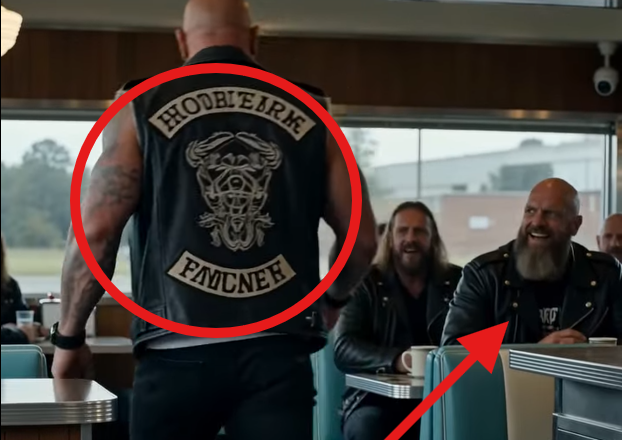
The diner went silent.
Not quiet.
Silent.
The kind of silence that makes guilty men hear their own breathing.
The biker stared at the old man, then at the cane, then at the broken glass on the floor.
“You’re bluffing.”
The old man didn’t answer right away.
He picked up a napkin and calmly wiped water from the table.
That calm scared the biker more than anger would have.
Outside the window, a black car door opened.
A man in a dark suit stepped out.
Then another.
The biker’s friends stopped smiling.
The old man looked at the waitress.
“Are you all right, Mary?”
Her eyes filled.
She nodded.
The biker blinked.
“You know her?”
The old man’s gaze sharpened.
“I know everyone you’ve been frightening in this diner.”
Mary’s hands trembled around the coffee pot.
“He comes every week,” she whispered. “Says if I report him, he’ll say I served him drunk.”
The biker snapped, “Shut up.”
The old man pressed the fob again.
The cane beeped twice.
A voice played from inside it.
The biker’s voice.
Clear.
Cruel.
Laughing.
Walk without it, old man.
Then another sentence.
Lower.
Meaner.
Say one word, Mary, and I’ll make sure your son goes back inside.
The biker’s face changed.
Mary covered her mouth.
The old man finally stood.
Slowly.
Painfully.
But when he reached for the cane, the waitress picked it up first and handed it to him with both hands.
Like it was not just a cane anymore.
Like it was proof.
The biker backed toward the door.
The men from the black car entered before he reached it.
One of them held a folder.
The old man looked at the biker.
“You were released on condition you avoid intimidation, assault, and witness harassment.”
The biker’s voice cracked.
“Who are you?”
The old man’s expression did not change.
“I’m the man who signed your early release.”
The entire diner froze.
The biker’s mouth opened, but nothing came out.
The old man stepped closer, leaning on the cane he had been mocked for needing.
“I came here because Mary wrote one letter.”
Mary began to cry.
“She didn’t ask for revenge,” he said. “She asked if old people, waitresses, and frightened customers still mattered to the law.”
His eyes moved over the bikers in the booth.
“So I came to see for myself.”
The biker whispered, “I didn’t touch her.”
The old man looked at the broken glass.
Then at the cane.
“No. You touched me.”
The men in suits moved forward.
The biker’s friends looked away.
One by one.
No brotherhood now.
No laughter.
Just chairs scraping backward as everyone tried to become a stranger.
The old man looked at Mary.
“You and your son are protected now.”
Mary’s lips trembled.
“I was scared no one would believe me.”
The old man glanced at the blinking red light in the cane.
“Sometimes truth needs a witness.”
Then he looked back at the biker being led toward the door.
“And sometimes it needs a recorder.”