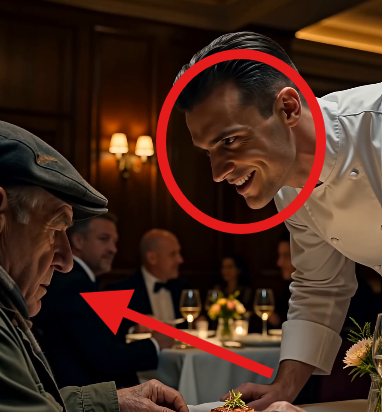
The chef stared at the folder like it was about to ruin him.
The old man opened it slowly.
Inside was a faded photograph of this same restaurant thirty years earlier.
Same chandelier.
Same dark wood walls.
But in the photo, the old man stood behind the counter with a young woman beside him, both smiling in aprons.
The head waiter whispered, “Mr. Bennett…”
The chef’s face went white.
The old man looked at him.
“My wife and I opened this place with twelve tables and one dream.”
The room stayed frozen.
“She cooked because she loved feeding people. Not rich people. Not important people. Hungry people.”
His voice cracked, but only for a second.
“She died at that back table after service one night. Her last words to me were, ‘Promise me this place never becomes cruel.’”
The chef stepped back.
“I didn’t know who you were.”
The old man closed the folder.
“That is exactly why you failed.”
The chef swallowed.
“I’m sorry, sir.”
“No,” the old man said softly. “You’re sorry I had power.”
The old man looked at the ruined plate.
“You spat on me because you thought I was poor. But you spat on everything my wife built.”
The diners lowered their eyes.
The head waiter stepped forward, tears in his own.
“He came every year,” he said quietly. “Always dressed like this. Always watching how we treated people.”
The chef’s hands began to shake.
The old man stood slowly.
“You’re done here.”
The chef looked around, but nobody defended him.
Then the old man turned to a young busboy standing near the kitchen, eyes wet and apron stained.
“You brought me water when everyone else ignored me.”
The boy froze.
The old man placed the black folder in his hands.
“My wife would have noticed that.”
Then he looked at the whole restaurant.
“This place does not need a chef who makes beautiful food.”
His voice hardened.
“It needs people who remember why food matters.”