That made it worse.
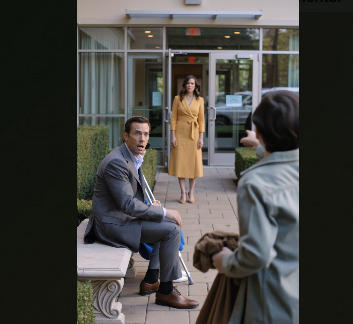
The father remained seated, bottle in hand.
The daughter sat beside him gripping the crutch.
The boy stood opposite, shaking but still there.
The wife stayed near the hospital doors, caught between coming closer and running.
“He’s lying,” she said.
Too quickly.
The father did not look at her.
He looked at the bottle, then at his daughter, then back at the boy.
“How do you know?” he asked.
The boy swallowed hard.
“I sleep near the records office wall,” he said. “The windows open sometimes. I hear nurses talk.”
The wife’s face tightened.
The father noticed.
The boy kept going.
“One nurse said the girl was responding too well. Another asked why she was still marked for transfer. Your wife said, ‘Because once her father signs, she won’t be his problem anymore.’”
The father went still.
Not angry.
Empty.
He turned to his daughter.
“Can you see me?”
The little girl’s lips trembled.
She nodded.
The wife whispered, “Please…”
But now even that sounded guilty.
The father asked the child the question he had been most afraid of all along.
“What did Mommy tell you?”
The girl started to cry.
“She said I had to stay sick,” she whispered. “So they would move me to the special house.”
The father stared at her.
“What special house?”
The child looked down.
“The one for children whose fathers sign them away.”
The whole garden seemed to stop breathing.
The boy pointed at the bottle. “She said it made her slow and sleepy before the tests.”
The father finally rose from the bench.
Very slowly.
And when he looked at his wife, the horror on his face was no longer just about poisoning.
It was about paperwork.
About false diagnosis.
About control.
About a plan that did not end with sickness — but with removal.
Then the little girl whispered the sentence that killed whatever lie was left:
“Mommy said when the papers are finished, I won’t live with you anymore.”