Trump Asks Judge to Void Hush-Money Conviction, Citing Supreme Court Immunity Ruling

NEW YORK — Lawyers for Donald Trump have asked a New York judge to overturn his conviction on 34 felony counts in the hush-money case, arguing that a recent Supreme Court ruling on presidential immunity invalidates key evidence presented to the jury.
The motion, filed in Manhattan Supreme Court, marks the first major attempt by Trump’s legal team to use the Supreme Court’s landmark decision in Trump v. United States to unravel a conviction that was already finalized. It underscores how dramatically the ruling has altered the legal landscape for cases involving current and former presidents — and how unsettled that terrain remains.
The Supreme Court Decision at the Center
At issue is the Court’s July ruling establishing that presidents enjoy:
- No immunity for purely private conduct
Crucially, the Court also held that prosecutors may not introduce evidence of official presidential acts unless a judge first determines that the conduct is unprotected.
Trump’s lawyers argue that this evidentiary rule applies retroactively to his New York trial, which concluded before the Supreme Court clarified the boundaries of presidential immunity. They claim prosecutors improperly relied on testimony and documents tied to Trump’s time in the White House — material the jury should never have seen.
“This verdict cannot stand under the Supreme Court’s new framework,” defense attorneys wrote, asserting that jurors were exposed to evidence “squarely implicating official presidential acts.”
A Historic Conviction — Now in Question
In May, a Manhattan jury found Trump guilty on all 34 counts of falsifying business records, stemming from a scheme to disguise reimbursements for a $130,000 hush-money payment to Stormy Daniels as legal expenses. Prosecutors argued the payments were intended to conceal damaging information from voters ahead of the 2016 election.
The verdict made Trump the first former U.S. president convicted of a felony and initially appeared to bring one of his criminal cases to a decisive close.
The Supreme Court’s immunity ruling, issued weeks later, reopened questions many believed were settled.
The Hope Hicks Testimony Dispute
Central to Trump’s challenge is testimony from Hope Hicks, a longtime adviser who served as White House communications director. Hicks testified about conversations with Trump during his presidency concerning media fallout from the hush-money revelations.
Defense lawyers argue those discussions were part of Trump’s official presidential duties — managing communications and political messaging — and therefore protected by immunity. If that testimony is deemed improper, they contend, the jury’s exposure alone requires the conviction to be vacated.
Prosecutors strongly disagree. They argue the underlying conduct — falsifying business records to conceal a private payoff — occurred before Trump took office and is inherently personal. Any references to his presidency, they say, provided context rather than proof.
“This was a case about a private scheme to influence an election,” a person familiar with the prosecution’s position said. “Presidential immunity does not rewrite history.”
Legal Experts: “Uncharted Territory”

Although the case was brought under New York state law, legal scholars say the Supreme Court’s ruling could still affect it, depending on how broadly judges interpret the evidentiary restrictions.
“This is genuinely uncharted territory,” said Jennifer Rodgers, a former federal prosecutor and CNN legal analyst. “We’ve never seen a jury verdict challenged because the Supreme Court changed the rules after the fact about what evidence could be shown.”
The trial judge must now decide two critical questions:
- Does the immunity ruling apply retroactively?
- If so, did any improper evidence meaningfully taint the verdict?
Prison Still Possible — But Increasingly Uncertain
Delay as Strategy
Time remains Trump’s most reliable ally.
Appeals can stretch for years. Statutes of limitations continue to loom over conduct tied to the 2020 election. If Trump serves a full term through 2029, some potential charges could become legally or politically impractical to pursue.
Defense attorneys have repeatedly pursued delay through expansive motions and appeals. The immunity ruling has amplified that strategy, forcing judges to dissect each act — and each piece of evidence — to determine whether it is official or private.
Accountability Versus the Presidency
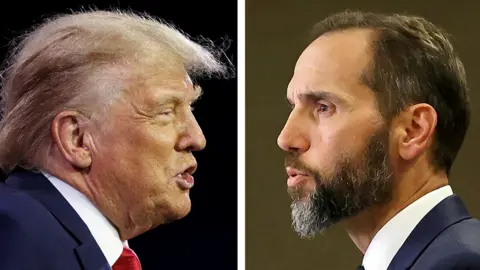
The dispute has reignited a fundamental debate: how to balance accountability with protecting the presidency.
The Supreme Court said its ruling was designed to shield the office, not the officeholder, from politically motivated prosecutions. Critics argue the effect may be the opposite.
“In trying to protect the presidency, the Court may have made presidents functionally untouchable,” said Kathleen Clark, a law professor at Washington University in St. Louis. “That is a profound shift in American law.”
Supporters counter that allowing criminal prosecution of presidential decision-making would cripple the executive branch and invite endless retaliation.
What Happens Next

The judge is expected to rule in the coming weeks on whether the conviction should be vacated, modified, or left intact. Any decision will almost certainly be appealed, potentially returning the case to higher courts — and possibly back to the Supreme Court.
Even if the conviction stands, sentencing could be delayed for months or longer. If it falls, the case would become a defining example of how rapidly the legal ground beneath American politics is changing.
For now, one fact remains unchanged: the hush-money payment, the falsified records, and the jury’s unanimous verdict are part of the public record.
Whether they ever result in prison time is a question the courts — and the country — are still struggling to answer.