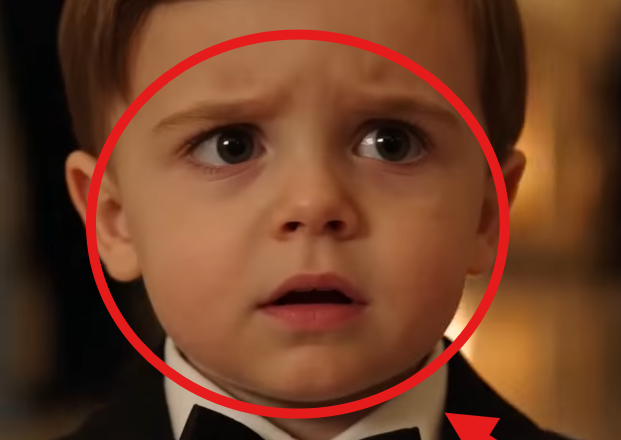
The woman in white’s lips trembled.
“That was not supposed to happen.”
The maid looked up at her through tears.
“No. He was not supposed to remember.”
The guests stared, suddenly ashamed of their own curiosity.
The man near the fireplace stepped forward, his face frozen.
“What is she talking about?”
The woman in white turned to him quickly.
“She’s confused. She used to help with the child.”
The toddler clung harder to the maid.
“No. She sings my sleep song.”
The maid closed her eyes.
That small sentence broke her.
The man’s voice shook.
“What sleep song?”
The maid whispered the first line.
The toddler immediately rested his head on her shoulder, calming like his body knew the sound before his mind did.
The man went pale.
“That song was sung to him as a baby.”
The maid looked at him.
“I know. I was there.”
The woman in white snapped, “Stop.”
But it was too late.
The maid stood, holding the child against her chest.
“I carried him. I gave birth to him. Then your family said a maid’s child could never inherit your name.”
The ballroom gasped.
The man stared at the woman in white.
“You told me his mother abandoned him.”
The maid’s voice broke.
“I never abandoned him. I was forced to stay in this house as staff so I could see him from across rooms and pretend not to love him.”
The toddler touched her cheek.
“Don’t cry, Mommy.”
That word destroyed the silence.
The woman in white stepped back.
“We gave him a better life.”
The maid looked at the chandeliers, the champagne, the polished guests.
“No. You gave him everything except the truth.”
The man slowly walked toward them, tears in his eyes.
He knelt in front of the child.
“Did you know?”
The toddler shook his head and held the maid tighter.
“I just missed her.”
The man covered his mouth.
Because no document, no lie, no family name had been stronger than a child recognizing the arms that once held him first.